October 3, 2023 · by Cherise Branch
If there’s one thing we know about fall it’s that our immune system is always a bit more vulnerable this time of year. With regular routines back in full swing, kids back in school, and the weather cooling down, it’s bound to happen!
Now is the time to support our immune army.
Let’s take a look at why our immune system is more vulnerable in fall, who is most at risk, and what you can do to get your immune army strong and ready to ward off invaders.
It’s not only that viruses are stronger in the fall because of the ideal weather conditions. Unfortunately, many of the same conditions viruses love can negatively impact our immune system.
Cold weather + low humidity = the ideal virus environment. And while the weather cools down outside, things heat up inside. Indoor heating can make the air hot and dry, which can irritate the delicate skin of the nasal, sinus, and throat passages. The resulting small cracks act like open doors, allowing bacteria and viruses to enter the body. Did you know that most viruses can reproduce as much as 100 times faster in heated, low-humidity air?
Our skin produces vitamin D readily when it’s exposed to sunlight, but lower levels of sunlight in the fall mean less Vitamin D for us. Research shows that Vitamin D (a.k.a. the Sunshine Vitamin) is a key nutrient needed to support a healthy immune system.
Fall means frequent changes in temperature, humidity, wind levels, and barometric pressure. This transition can be hard on the body, causing stress as it constantly tries to adapt to this roller coaster of seasonal changes.
When a virus gets past our body’s first line of defense: our skin and mucous membranes, it will encounter our immune army. But will it meet a big, powerful army or a small, ineffective one? Let’s take a look at the factors that may weaken our immune defense.
When a virus invades, your immune soldiers are designed to work fast to locate and deactivate the invader. But if they are already fighting battles against viruses, bacteria or any illness that impacts the immune system, there may not be enough soldiers available to wage war against the new virus.
As a result, the new virus can slip past the soldiers, (aka our white blood cells working via our lymphatic system) and cause unfettered damage.
In some cases, both the illness itself and the treatment may weaken your immune system. Some drugs (such as those used in chemotherapy or to treat autoimmune conditions such as psoriasis) work by deliberately suppressing the immune system.
Research shows that chronically being in fight or flight mode can significantly weaken the immune response.
If Netflix has become your late-night BFF consider this: sleep is when your immune system takes note of the day’s invaders. Every night, our immune system gathers everything it has learned about viruses and bacteria it encountered that day. It notes the invader’s characteristics and methods of attack and creates antibodies to fight off that invader in the future. Research shows that this process of ‘immune memory’ creation can ONLY happen during sleep.
Eating sugar feeds the bad microbes in our gut so that they multiply. If these bad microbes become too numerous, our good bacteria may be crowded out. Since the majority of our immune system resides there, the state of our gut is a vital part of the immune response.
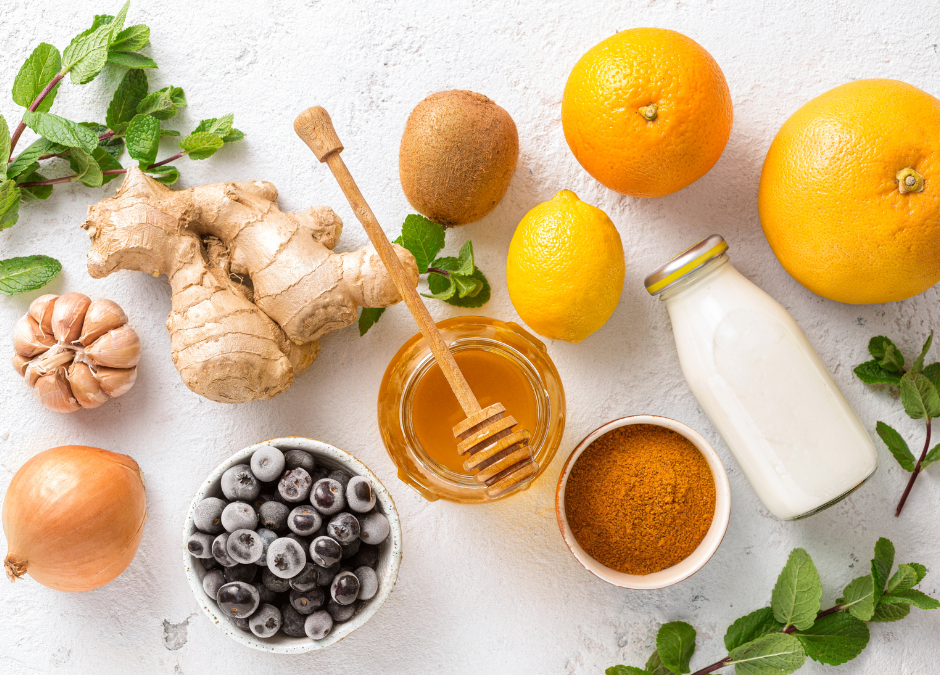
Did you know that 80% of our immune system resides in our gut? Starve out bad microbes, and nourish your good gut microbes by eating an organic, gut-friendly diet rich in nutrient-dense foods. Here are some choices to consider:
Proteins
Make things uncomfortable for viruses by increasing the humidity of your indoor air. If you only have one humidifier, put it in the bedroom to treat the air while you sleep.
Regularly having 7 – 8 hours of uninterrupted sleep per night is a fast track to optimal immune function. In addition to forming ‘immune memories’ our bodies detox and produce hormones at night. These tasks can only happen while you’re asleep. Research shows that lack of sleep significantly weakens the immune system, and sets the stage for further illness.
For a two-letter word, ‘no’ can be very difficult to say. But think about it this way: you’re not saying no to someone else. You’re saying yes to yourself. Each week carve out some time for yourself and don’t book anyone else in, no matter how tempting it may be to say yes.
Exercise increases circulation, making sure that your immune army cells can quickly get to where they are most needed. Avoid injury by easing back in with gentle exercises like tai chi, yoga, or walking.
Ready for some cardio? It turns out that strenuous exercise doesn’t have the immune-lowering action we once thought, so go for it! Recent research shows that strenuous exercise increases natural Killer cells – a key type of soldier in our immune army.
Keeping your body fully nourished and topped up in these key vitamins can help it to be ready should the battle arrive at your door:
Vitamin C is a powerful antioxidant that’s essential to the body. It contributes to our immune defense, among many other roles, by supporting various immune system functions. It is actively transported to the skin where it helps to create a strong initial barrier against pathogens, and it encourages the production and function of white blood cells for internal defense.
The Sunshine Vitamin is now recognized as a key part of immune support by the medical community as a whole. Research shows that Vitamin D deficiency is associated with higher rates of infection and longer recovery times, and supplement is recommended in the winter months.
Zinc affects multiple aspects of the immune system. It is crucial for the normal development and function of immune cells and has a crucial role in moderating the body’s inflammatory response.
Elderberries have long been used in herbal medicine to support the immune system during an illness or infection and reduce the symptoms of illnesses such as colds and flu. Packed with antioxidants, elderberry has a direct antiviral effect, blocking viral proteins and inhibiting the early stages of an infection. Try it in a delicious syrup that even kids will love!
Do you feel ready for fall? Let’s make sure your immune system is fully supported to work at its best. Together we can design a personalized plan to make sure your immune army is ready to protect you against whatever this fall throws at you!
References
Besedovsky L, Lange T, Haack M. The Sleep-Immune Crosstalk in Health and Disease. Physiol Rev. 2019;99(3):1325-1380. doi:10.1152/physrev.00010.2018
Calder PC, Carr AC, Gombart AF, Eggersdorfer M. Optimal Nutritional Status for a Well-Functioning Immune System Is an Important Factor to Protect against Viral Infections. Nutrients. 2020;12(4):1181. Published 2020 Apr 23. doi:10.3390/nu12041181
Campbell JP, Turner JE.Debunking the Myth of Exercise-Induced Immune Suppression: Redefining the Impact of Exercise on Immunological Health Across the Lifespan. Front. Immunol., 16 April 2018 | https://doi.org/10.3389/fimmu.2018.00648
Centres for Disease Control and Prevention: https://www.cdc.gov/
Charoenngam N, Holick MF. Immunologic Effects of Vitamin D on Human Health and Disease. Nutrients. 2020;12(7):2097. Published 2020 Jul 15. doi:10.3390/nu12072097
Hawkins J, Baker C, Cherry L, Dunne E. Black elderberry (Sambucus nigra) supplementation effectively treats upper respiratory symptoms: A meta-analysis of randomized, controlled clinical trials. Complement Ther Med. 2019;42:361-365. doi:10.1016/j.ctim.2018.12.004
Book your first consult and get exclusive access to Cherise's basic wellness plan.
Schedule your first consult